Biscayne by Boat
A national park that is 95 percent water, with a millionaire’s folly lighthouse and the Miami skyline floating on the horizon.
The short version
- Biscayne protects the bay south of Miami — reefs, mangrove coast, and island keys, 95 percent of it underwater — and the boat is the only way to meet it; park background at nps.gov/bisc. Entry itself is free; the water costs.
- The Boca Chita Key Heritage Cruise runs daily from Dinner Key Marina in Coconut Grove through the park’s official institute — about 3.5 hours with an hour ashore, $83 adults, $49 children — bookings at biscaynenationalparkinstitute.org. Winter boats leave at 9:15 am, summer at 1:30 pm with a snorkel hour added June through August.
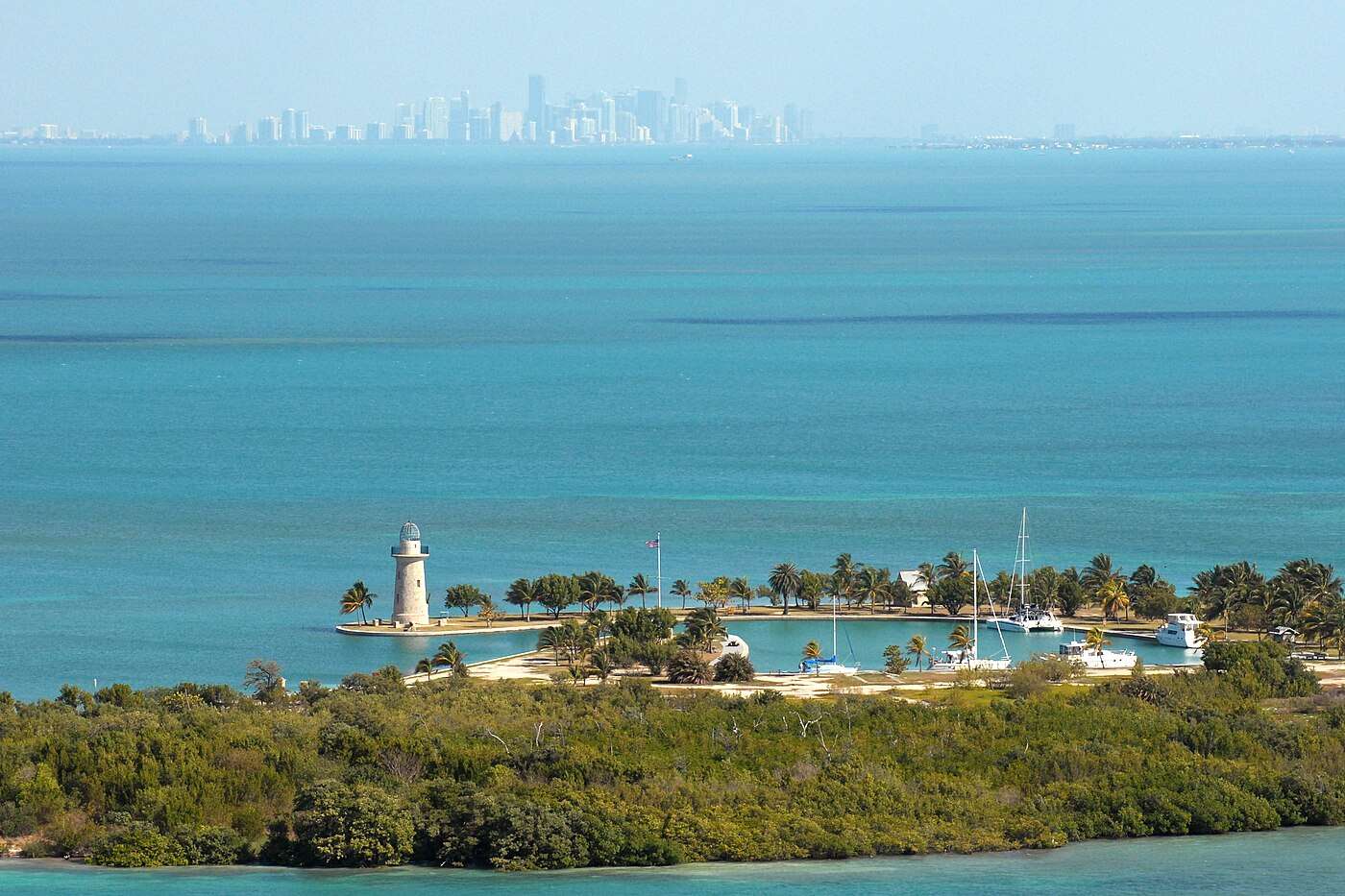
- Boca Chita is the bay’s postcard: a 65-foot ornamental lighthouse built in the 1930s by honeymooning industrialist Mark Honeywell as a private island flourish — climbable when staff open it, minimum height 42 inches — with the Miami skyline hanging on the horizon behind.
- The island sells nothing — no food, no drinks — and the pavilion and short trail fill the hour easily; drinking water exists, refillable bottles and real sun cover carry the day.
- Stiltsville’s wooden houses on the bay flats and the mangrove shoreline fill the narrated crossing — the rangers’ stories of hurricanes, bootleggers, and the park fight that saved the bay from becoming a second Miami Beach.

Getting there
The cruise leaves Dinner Key Marina in Coconut Grove — not the park’s Homestead visitor center — an easy rideshare from central Miami, with limited paid parking nearby for drivers. Check-in runs ahead of the departure: 9:15 am November through May, 1:30 pm June through October. The park’s land entrance at Convoy Point, an hour south, offers the visitor center and jetty walk for a car-based alternative, but the islands and lighthouse need the boat.
The day
Board at Dinner Key, cross the bay past Stiltsville’s surviving stilt houses, and let the narration carry the park’s origin story — how a dredge-and-fill resort scheme died and a national park happened instead. Land at Boca Chita for the hour: climb the lighthouse if staff have it open for the full bay-and-skyline panorama, walk the short trail, and photograph the palm harbor that looks engineered for postcards because it was. Summer sailings add a snorkel hour in the bay’s grass flats — gear provided. Back by early afternoon or evening by season, with Coconut Grove’s cafés waiting at the dock.
When to go
November through May is the season — morning departures, dry skies, and the skyline crisp across the water; it is also Miami’s pleasant half of the year. Summer runs afternoon sailings with the snorkel add-on and the daily thunderstorm lottery. The lighthouse opens when staffing allows in every month; the mosquitoes of the still months argue for the breezy ones.
Frequently Asked Questions
How do you visit Biscayne National Park from Miami?
By boat — the park institute’s Boca Chita Heritage Cruise from Dinner Key Marina in Coconut Grove is the standard day: about 3.5 hours, daily, $83 adults. The Homestead visitor center serves drivers but the islands need the water.
What is at Boca Chita Key?
The 1930s ornamental lighthouse industrialist Mark Honeywell built for his private island parties — plus a palm harbor, picnic pavilion, short trail, and the Miami skyline across the bay. The hour ashore covers it comfortably.
Can you climb the lighthouse?
When staff open it — common on cruise landings — with a 42-inch minimum height for the climb. The observation deck gives the park’s best view: reef-streaked bay one way, skyline the other.
Is there food or water on the island?
Nothing is sold — bring everything. Drinking water and restrooms exist at the harbor; the boat allows coolers within reason. Reef-safe sunscreen and a hat are the uniform.
Is Biscayne worth it against the Everglades?
They split the ecosystem: Everglades is sawgrass and gators by land, Biscayne is reef, bay, and islands by boat. With one day for water and skyline views, Biscayne; with a car and a gator agenda, the Everglades.